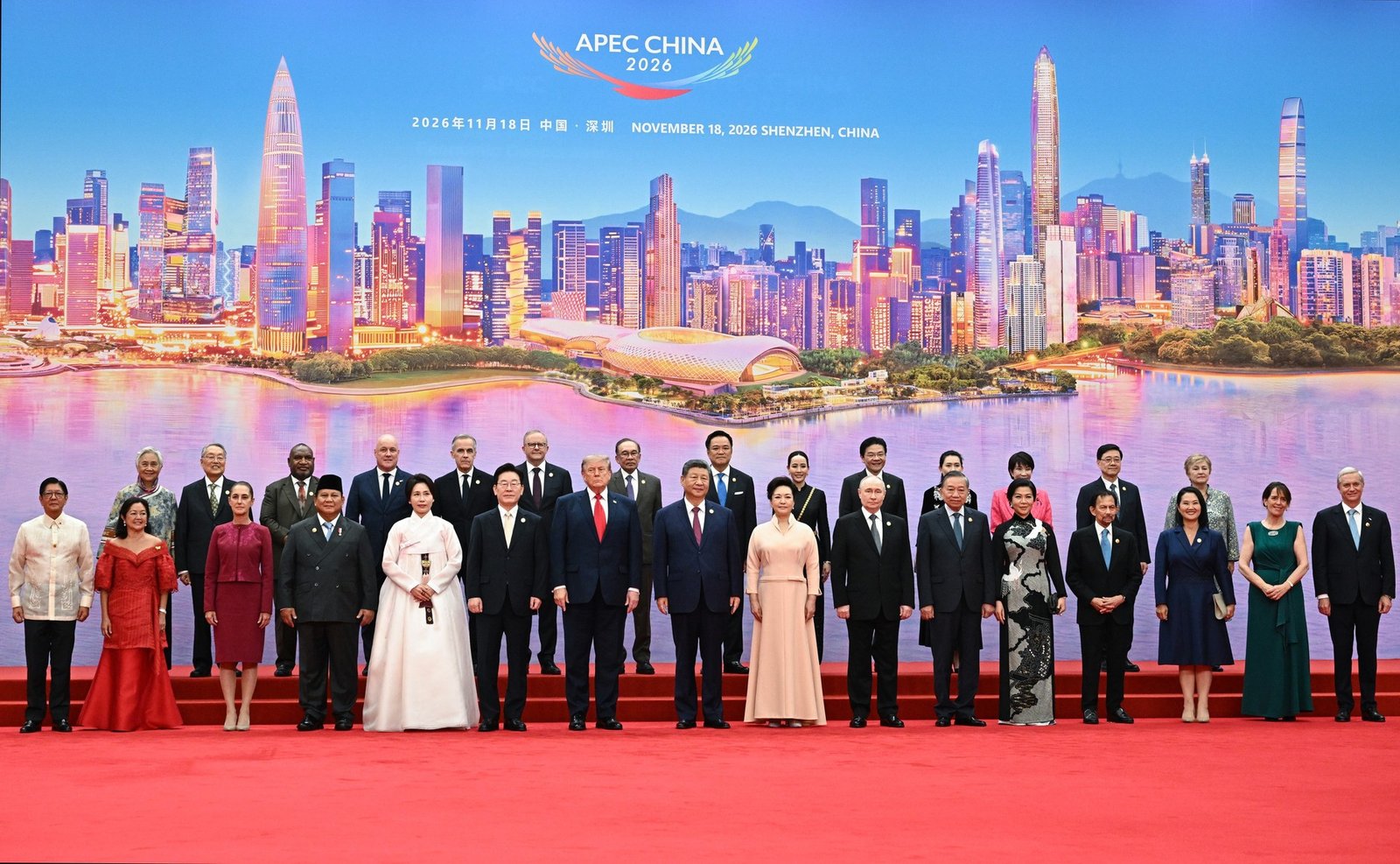
The Asia-Pacific Economic Cooperation (APEC) summit in Shenzhen has emerged as the centre of international diplomatic attention, with US President Donald Trump, Chinese President Xi Jinping and Russian President Vladimir Putin preparing for an unprecedented trilateral meeting. The gathering brings together the leaders of three major global powers at a time of heightened geopolitical tensions, ongoing conflicts, trade disputes and growing concerns over nuclear security. Their expected discussions could have implications far beyond the Asia-Pacific region, particularly for the future of international security and the global economic order.
The three leaders are scheduled to meet on Thursday, November 19, on the sidelines of the APEC Economic Leaders' Meeting. The proposed talks are being closely watched because they would mark the first formal trilateral meeting involving the leaders of the United States, China and Russia. According to reports, the discussions are expected to cover the war in Ukraine, the conflict involving Iran, nuclear arms control, international trade and emerging technologies, including artificial intelligence. However, officials have not confirmed whether the meeting will produce a joint statement or any binding agreement. <Cite refs={["turn204850search0","turn204850search3"]}/>
The diplomatic engagement follows separate high-level interactions between the leaders. Xi Jinping and Vladimir Putin held bilateral discussions in Shenzhen on November 18, where both leaders highlighted their strategic partnership and criticised what they described as Western protectionism and economic pressure. Xi called for free and open trade, stronger regional cooperation and greater economic integration, while Putin argued that sanctions, tariffs and export restrictions could not stop the development of competing economies. The two leaders also expressed support for a more multipolar international order. <Cite refs={["turn204850search2"]}/>
Ukraine and Iran Conflicts Likely to Feature in Discussions
The Russia-Ukraine war is expected to remain one of the most sensitive subjects surrounding the meeting. Trump has previously expressed interest in discussing the conflict with Putin, while Moscow continues to seek international support for its position. Any discussion involving Ukraine without direct Ukrainian participation is likely to attract scrutiny from Kyiv and its European partners. It remains uncertain whether the three leaders will explore a possible diplomatic framework or simply exchange their respective positions.
The conflict involving Iran is another major issue on the expected agenda. Washington, Moscow and Beijing have differing strategic interests in the Middle East, making the subject particularly complicated. The leaders may discuss regional stability, security concerns and the wider consequences of the conflict for global energy markets. Nuclear arms control is also expected to be a central topic, with Trump having expressed interest in discussing reductions in nuclear weapons and broader international security arrangements. However, expectations of an immediate agreement remain limited. <Cite refs={["turn204850search3","turn204850search4"]}/>
Trump-Xi Meeting: Trade and Technology in Focus
Before the trilateral engagement, Trump and Xi are also scheduled to hold bilateral talks. Their meeting comes amid a fragile trade understanding between Washington and Beijing, with several disagreements still unresolved. Tariffs, Chinese restrictions on rare-earth exports, US controls on advanced semiconductor technology and agricultural purchases are expected to be among the key issues.
Artificial intelligence and access to advanced computing technology are emerging as increasingly important elements of US-China relations. Washington has tightened restrictions on China's access to certain advanced AI chips, while Beijing has emphasised technological self-reliance and the development of its domestic technology sector. Both sides have an economic interest in avoiding a further escalation of tensions, although their differences over technology and national security remain substantial. <Cite refs={["turn204850news7","turn204850search3"]}/>
APEC's Broader Economic Agenda
While the proposed trilateral meeting has attracted much of the global attention, the wider APEC summit is focused on economic cooperation across the Asia-Pacific region. The grouping brings together economies that account for a substantial share of global trade and economic activity. Discussions include strengthening regional trade, improving investment conditions, digital transformation, supply-chain resilience and cooperation in emerging technologies.
In his address, Xi Jinping called for open trade, stronger regional economic integration and a fair business environment. He also highlighted the role of digitalisation and artificial intelligence in driving future economic growth, urging greater cooperation in digital trade, smart customs systems and regional data governance. These priorities reflect the growing importance of technology and connectivity in the economic future of the Asia-Pacific. <Cite refs={["turn204850search1"]}/>
A Diplomatic Moment Under International Scrutiny
The meeting has generated considerable debate among international observers. Some see the gathering as a rare opportunity for the world's three major powers to discuss critical global challenges directly. Others caution that the leaders' competing interests may limit the possibility of concrete outcomes. There are also concerns among smaller economies that major powers could make decisions affecting regional security and international trade without adequately considering the interests of other countries.
The Kremlin has indicated that the Trump-Putin interaction will not be a full-scale bilateral negotiation, although representatives from both delegations are expected to attend. A separate hour has reportedly been set aside for the three-way discussion. Whether the leaders can bridge their differences sufficiently to issue a joint statement remains uncertain. <Cite refs={["turn204850news6","turn204850search3"]}/>
The Shenzhen summit therefore represents both an important diplomatic opportunity and a test of international cooperation. Even without an immediate breakthrough, direct engagement among Trump, Xi and Putin could influence future discussions on nuclear security, regional conflicts, trade and technology. The world will be watching closely to see whether this historic meeting produces meaningful diplomatic progress or remains primarily a symbolic demonstration of great-power engagement.