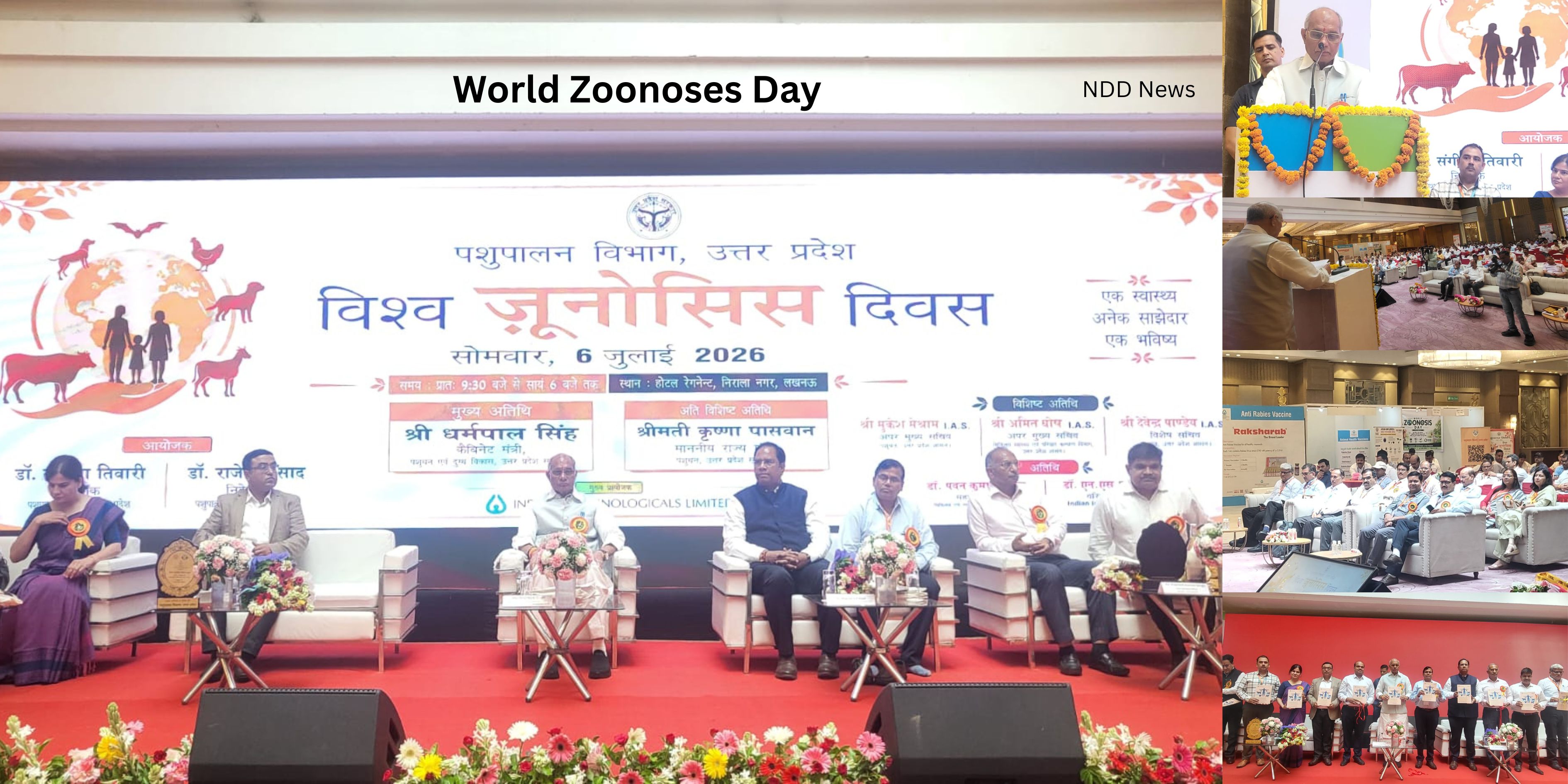
The Animal Husbandry Department, Government of Uttar Pradesh, organised a comprehensive awareness programme in Lucknow on World Zoonoses Day to strengthen public understanding of diseases that transmit between animals and humans. The event, held at a prominent hotel in Nirala Nagar, brought together senior ministers, IAS officers, veterinarians and stakeholders to discuss prevention strategies and the “One Health” framework.
Chief Guest Shri Dharmpal Singh, Hon’ble Cabinet Minister for Animal Husbandry and Dairy Development, addressed the gathering and underscored the need for collective action. He highlighted that healthy animals lead to a healthy society and a secure future. The minister stressed the importance of regular vaccination, hygiene practices and timely treatment to safeguard both livestock and human populations.
Key Highlights of the Programme
The event featured the formal unveiling of the Compendium for Veterinarians on Zoonotic & Priority Animal Diseases. This practical guide is expected to equip veterinary professionals across the state with updated knowledge on diagnosis, prevention and control of priority zoonoses such as rabies, brucellosis, leptospirosis and avian influenza.
The anti-rabies vaccine Raksharabh was prominently showcased as a key tool in rabies control efforts. Officials noted that mass vaccination of dogs and other domestic animals remains one of the most effective ways to break the chain of transmission to humans.
Senior ministers, IAS officers and other departmental heads, participated in the discussions. The programme also focused on inter-sectoral coordination between animal husbandry, human health and environmental departments.
Why This Matters
Zoonotic diseases remain a significant public health challenge in India. World Zoonoses Day, observed globally on July 6, commemorates the first successful rabies vaccination by Louis Pasteur in 1885. In India, rabies continues to claim lives, particularly in rural areas where awareness and access to post-exposure prophylaxis remain limited.
Uttar Pradesh, with its large livestock population and rural economy, stands to benefit significantly from stronger zoonoses prevention measures. Improved veterinary services, widespread vaccination drives and public awareness can reduce economic losses in the animal husbandry sector while protecting human health.
The “One Health” approach promoted at the event recognises that the health of people, animals and the environment are closely linked. Such coordinated efforts are essential for early detection and control of emerging infectious diseases.
Way Forward
Officials called for greater participation from pashupalaks (livestock owners), veterinarians, and citizens in maintaining hygiene, ensuring timely vaccination of pets and livestock and reporting unusual animal illnesses promptly. The state government is expected to scale up awareness campaigns and vaccination programmes in the coming months.
The event concluded with a strong message of collaboration and shared responsibility. Participants expressed optimism that sustained efforts will make Uttar Pradesh safer from zoonotic threats and contribute to the broader national goal of a healthier India.
Such initiatives not only raise awareness but also strengthen the veterinary and public health infrastructure, ultimately supporting rural livelihoods and national health security.