
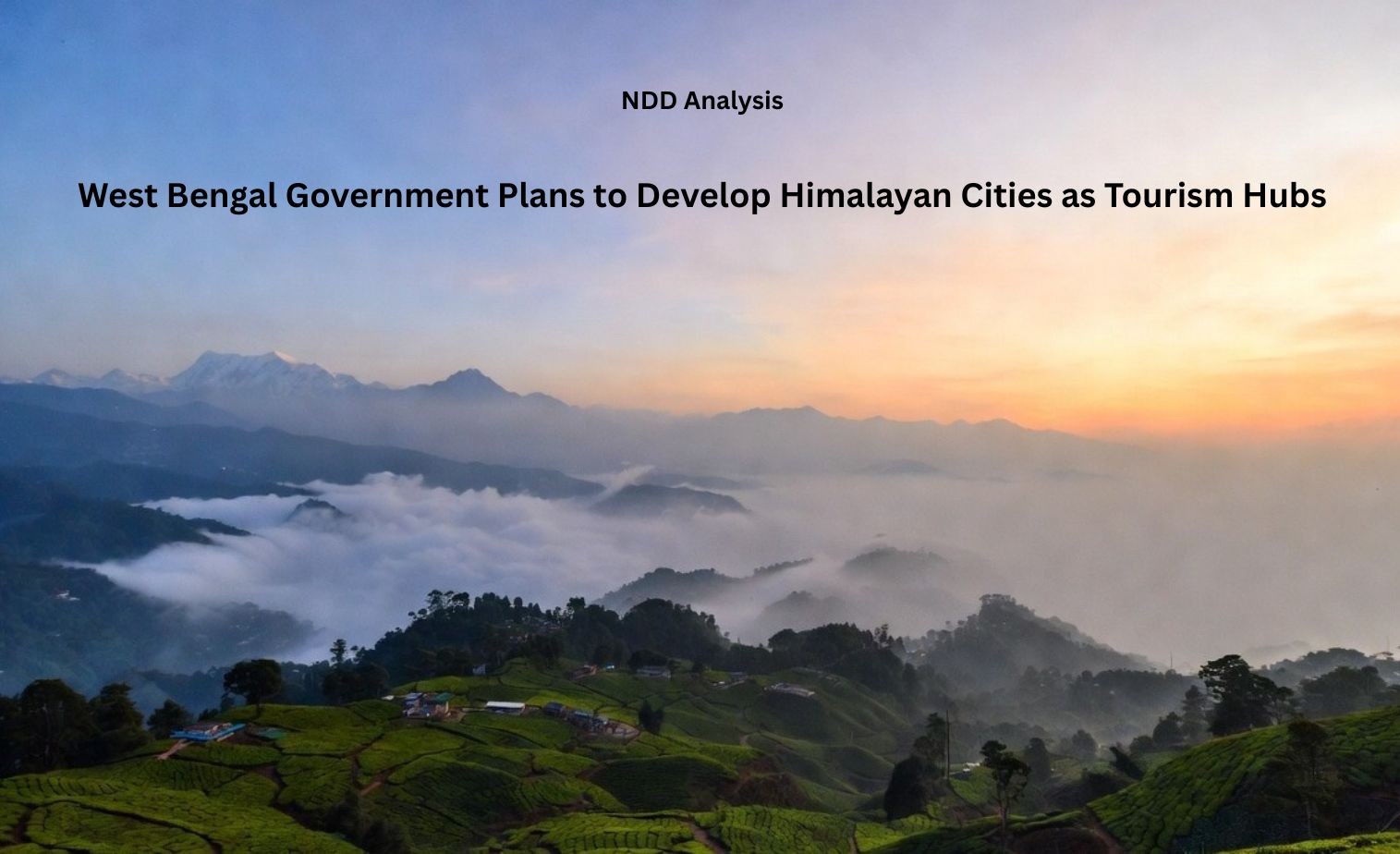
The West Bengal government has unveiled an ambitious vision to transform five key towns in North Bengal — Darjeeling, Mirik, Kurseong, Kalimpong, and Siliguri — into premier Himalayan tourism hubs. The move, announced by state minister Agnimitra Paul during her visit to the region, is expected to revitalise the local economy, generate jobs, and promote sustainable development in the hills.
This initiative comes at a time when North Bengal’s traditional strengths in tea and tourism are being reimagined for the future. By positioning these towns as integrated tourism destinations, the state aims to attract more visitors while ensuring that growth benefits local communities and respects the fragile Himalayan ecosystem.
The Vision for Himalayan Tourism Hubs
The plan focuses on developing the five towns as modern yet culturally rooted Himalayan cities. Darjeeling, already famous for its tea gardens and the UNESCO-listed toy train, is expected to see enhanced tourism infrastructure. Mirik, known for its picturesque lake, and Kurseong, with its scenic charm, are set to gain from upgraded facilities and new attractions. Kalimpong, celebrated for its flowers and monasteries, and Siliguri, the commercial gateway to the hills, will play key roles in the overall ecosystem.
Officials have indicated that the development will cover tourism, trade, the tea industry, and broader economic activities. The vision includes better connectivity, improved civic amenities, and promotion of eco-friendly and experiential tourism such as tea garden stays, trekking, wellness retreats, and cultural experiences.
Economic Promise and Job Creation
North Bengal has long faced economic challenges, including fluctuations in the tea sector and limited employment opportunities for youth. Tourism development offers a promising pathway to address these issues. By expanding hospitality, guiding services, local crafts, and adventure tourism, the initiative could create thousands of direct and indirect jobs.
Siliguri’s role as a transport and commercial hub is particularly significant. Improved tourism infrastructure here could boost the entire region’s connectivity, making it easier for visitors to explore the hills while supporting local businesses. The focus on year-round tourism — beyond the traditional peak seasons — holds potential for more stable livelihoods in the hills.
Sustainability at the Heart of the Plan
The Himalayan region is ecologically sensitive, and any development must prioritise sustainability. The government’s approach appears to recognise this, with emphasis on responsible tourism practices that protect biodiversity, manage waste, and involve local communities.
Experiences like tea tourism in Darjeeling’s estates, homestays in Kalimpong, and nature-based activities in Mirik and Kurseong can be developed in ways that minimise environmental impact. Community participation will be crucial to ensure that tourism revenues support local development rather than leading to overtourism or ecological strain.
This aligns with broader national goals of promoting sustainable and inclusive tourism that benefits both visitors and residents.
Challenges and the Road Ahead
Transforming these towns into world-class tourism destinations will require addressing longstanding issues such as road connectivity, waste management, and disaster resilience in landslide-prone areas. Skill development for local youth in hospitality and tourism services will also be essential.
The success of the initiative will depend on coordinated efforts between the state government, local bodies, and the private sector. Public-private partnerships, along with support from central schemes for tourism and urban development, could accelerate progress.
If executed thoughtfully, this vision could serve as a model for other Himalayan and hill regions in India, demonstrating how targeted tourism development can drive regional economies while preserving natural and cultural heritage.
The announcement reflects a growing recognition that India’s hills and smaller towns hold immense untapped potential for tourism-led growth. For North Bengal, it offers a hopeful pathway toward economic revival and renewed pride in its Himalayan identity.