
The United States has triggered a fresh debate over its Russia policy after President Donald Trump announced an arrangement for Russian diesel supplies to the American and global markets, just weeks after Washington backed legislation authorising tariffs of up to 100% on countries purchasing Russian oil and gas. The announcement has raised questions about the consistency of American sanctions policy, its treatment of India and the influence of domestic economic pressures ahead of the US midterm elections on November 3. <Cite refs={["turn705808news9","turn705808search1"]}/>
Trump's Russian Diesel Move Reopens the Sanctions Debate
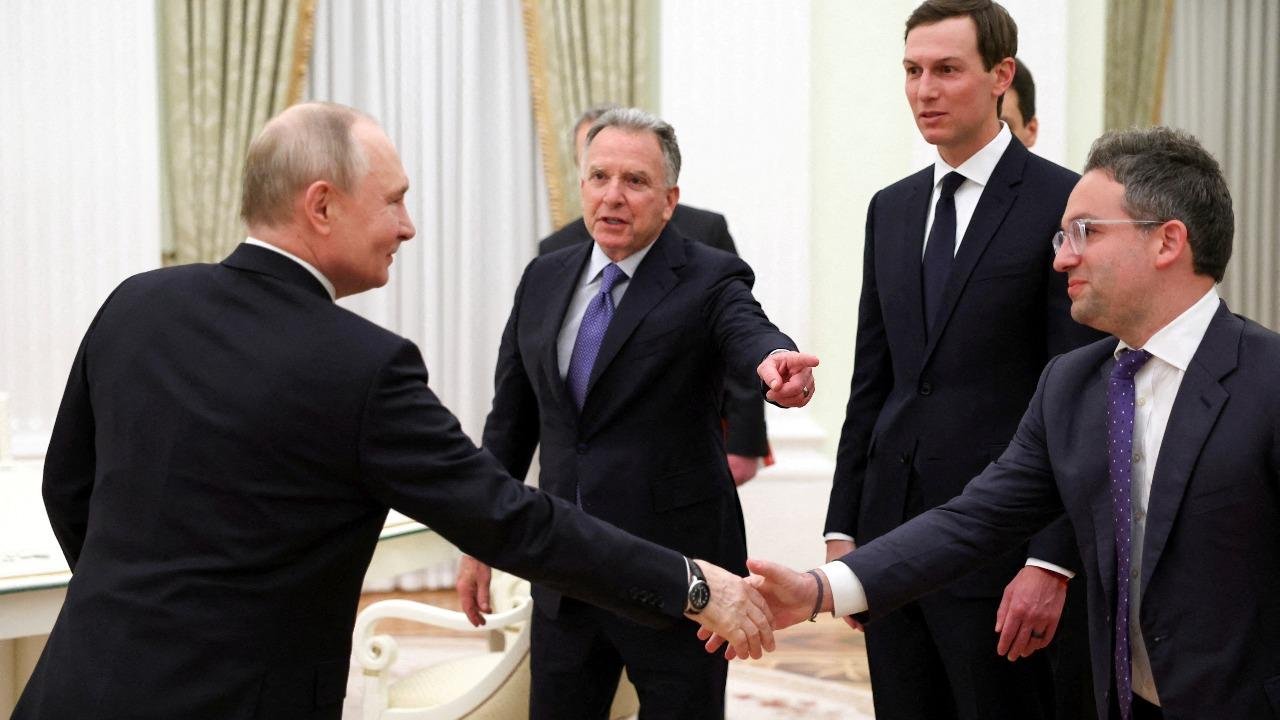
Trump announced on October 9 that Russia would immediately supply more than 300,000 metric tonnes of diesel, with further shipments expected in November and beyond. The announcement followed discussions with Russian President Vladimir Putin. The US Treasury Department subsequently issued a temporary six-month licence easing sanctions for certain Russian diesel shipments, allowing eligible fuel already loaded onto tankers to be supplied to the market under specified conditions. <Cite refs={["turn705808news9","turn705808search2"]}/>
The move represents a significant shift in the administration's approach to Russian energy. Following Russia's full-scale invasion of Ukraine in 2022, the United States banned imports of Russian oil and petroleum products. Washington and its allies subsequently sought to restrict Moscow's energy revenues, arguing that these funds helped sustain its war effort.
The latest arrangement has therefore raised a difficult question: if Russian fuel can be permitted into the American supply chain when domestic energy prices are under pressure, why should other countries face punitive trade measures for purchasing Russian energy?
India Faces the Prospect of Tariffs Up to 100%
The controversy has particular significance for India, one of the world's major buyers of Russian crude oil. In September 2026, the US Congress passed legislation commonly referred to as the Lindsey O. Graham Sanctioning Russia and Iran Act of 2026. The measure authorises the US president to impose tariffs of up to 100% on imports from qualifying countries that continue purchasing Russian-origin crude oil or natural gas, or facilitate sanctions evasion. The legislation provides the administration with discretion over implementation and potential adjustments. <Cite refs={["turn705808search1","turn705808search3","turn705808search4"]}/>
India's exposure is substantial because Russian crude has become an important component of its energy mix. According to figures cited by the Global Trade Research Initiative, India imported approximately $40.8 billion worth of Russian crude in the 2025–26 financial year. Consequently, the possibility of additional American tariffs could affect Indian exporters, including manufacturers and businesses that depend on access to the US market.
It is important to distinguish between authorisation and implementation: the legislation permits tariffs of up to 100%, but that does not mean every Indian product automatically faces such a duty. The precise consequences depend on the law's application, presidential decisions and any exemptions or adjustments. <Cite refs={["turn705808search3","turn705808search4"]}/>
Is Washington Applying a Double Standard?
Critics may interpret the contrast between the pressure on India and the American decision to facilitate Russian diesel supplies as a double standard. India has consistently argued that its energy purchases must be assessed in the context of national interest, affordability and the need to secure reliable supplies for a population of more than a billion people.
New Delhi's position has been that energy procurement decisions are shaped by market conditions and national requirements. Russian crude has offered Indian refiners an additional source of supply, while affordable energy remains important for inflation, industrial production and household consumption.
Washington, meanwhile, has justified pressure on Russian energy buyers as part of a strategy to reduce Moscow's revenues. The administration could argue that temporary diesel arrangements serve a different immediate purpose: addressing supply shortages and elevated fuel prices in the United States.
The two situations are therefore not necessarily identical in legal terms. The American measure targets qualifying purchases of Russian-origin crude oil or natural gas, while the latest announcement concerns diesel supplies and a temporary sanctions licence. Nevertheless, the apparent policy reversal raises questions about whether the same strategic principles are being applied consistently when domestic economic interests are at stake. <Cite refs={["turn705808search0","turn705808news7","turn705808news9"]}/>
Midterm Elections Could Be Driving the Decision
The timing of Trump's announcement is particularly significant. American voters will go to the polls on November 3 to elect members of Congress in the midterm elections. Fuel prices and the cost of living are politically sensitive issues because they affect transport costs, household budgets, businesses and inflation.
The administration has an incentive to demonstrate that it is taking action to increase fuel availability and ease pressure on consumers. Russian diesel supplies could offer an additional source of fuel, although the extent to which the arrangement will reduce prices remains uncertain.
The political consequences are already visible. A bipartisan group of US senators has criticised the proposed arrangement, arguing that easing restrictions on Russian fuel could undermine sanctions intended to limit Moscow's ability to finance its war against Ukraine. Some lawmakers have also questioned whether the administration can implement the arrangement without conflicting with existing legislation. <Cite refs={["turn705808news6","turn705808news7"]}/>
This criticism creates a dilemma for Trump. Maintaining restrictions could preserve pressure on Russia but potentially leave the administration with fewer options to address fuel-price concerns. Relaxing restrictions may help increase supply, but it could expose the president to accusations of weakening his own Russia policy.
However, the timing alone does not establish that the decision was made primarily for electoral reasons. The administration has also cited energy-market conditions, and the actual impact will depend on the volume of deliveries, their cost and the wider global supply situation.
What Does This Mean for India-US Relations?
For India, the central concern is whether Washington will apply its tariff powers consistently or use them selectively as a negotiating tool. A potential 100% tariff could disrupt Indian exports, complicate trade negotiations and create uncertainty for businesses on both sides.
India may seek clarification from Washington regarding the scope of the legislation, the treatment of different energy products and the availability of exemptions. Any American flexibility over Russian diesel imports could strengthen New Delhi's argument that energy policy should account for domestic economic requirements and changing market conditions.
At the same time, India and the United States have substantial interests in trade, investment, technology and security cooperation. Both countries have reasons to prevent disagreements over energy purchases from causing wider damage to their economic relationship.
A Test of America's Russia Policy
The Russian diesel arrangement places the Trump administration at the intersection of three competing priorities: restricting Russia's energy revenues, managing domestic fuel prices and maintaining pressure on countries that purchase Russian energy.
The coming weeks will reveal whether the arrangement remains a temporary market intervention or develops into a broader change in US policy. For India, the key issue is whether the United States will use its tariff powers against qualifying Russian energy buyers while simultaneously making exceptions for its own economic needs.
Ultimately, the episode is not only about diesel. It is a test of how consistently Washington applies its sanctions policy when geopolitical objectives collide with domestic economic pressures. With the November 3 midterm elections approaching, the political and economic consequences of the decision are likely to remain under close scrutiny.